
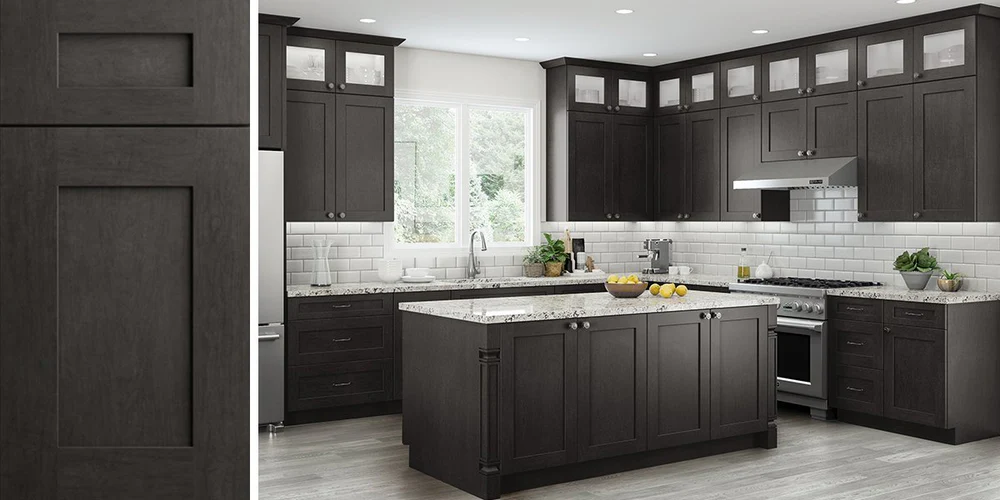
Kitchen Cabinets: The Complete Guide to Styles, Colors, Costs, Painting & Care
If you’re planning a kitchen remodel, painting your existing doors, or just trying to get your pots and pans under control, your cabinets are where nearly every decision starts. They shape how the room looks, how much you’ll spend, and how well the kitchen actually works day to day.
This guide covers everything from choosing a cabinet color and material to painting, cleaning, organizing, and buying whether you’re shopping at IKEA, Home Depot, Lowe’s, or a custom shop. Use the sections below to jump to what you need, or read start to finish if you’re planning a full kitchen cabinets refresh.
Types of Kitchen Cabinets
Most kitchens are built from four cabinet categories, and understanding what each one is designed for makes planning a layout or a shopping trip much easier.
Base Cabinets
Base cabinets sit on the floor and support your countertop, typically standing 34.5 inches tall (36 inches with a countertop) and 24 inches deep. They carry the heaviest daily load: sinks, dishwashers, trash pull-outs, and deep drawers for pots and pans.
Wall Cabinets
Mounted above the counter, wall cabinets usually sit 18 inches above the countertop and range from 12 to 42 inches tall. They hold everyday dishes, glasses, and spices anything you want within easy reach without bending down.
Pantry (Tall) Cabinets
Pantry cabinets run floor to ceiling, often 84 to 96 inches tall, and function like a built-in closet for food, small appliances, or cleaning supplies. They’re one of the most requested upgrades in kitchen remodels because they add serious storage without expanding the room’s footprint.
Specialty Cabinets
This category covers everything built to solve an awkward spot: corner cabinets with a lazy Susan or diagonal pull-out, blind-corner units, pull-out spice racks, tray dividers, and appliance garages. If your kitchen has a tricky layout, specialty cabinets are usually the fix.
Kitchen Cabinet Materials Explained
The material behind the door affects durability, price, and how well the cabinet will take paint if you ever want to change the color.
| Material | Durability | Relative Cost | Best For | Moisture Resistance |
| Solid wood (oak, maple, cherry) | Very high — can be refinished repeatedly | $$$–$$$$ | Long-term investment, traditional styles | Good, but can warp with extreme humidity |
| Plywood | High — resists warping better than solid wood | $$–$$$ | Cabinet boxes (even under wood-veneer doors) | Good |
| MDF (medium-density fiberboard) | Moderate — dents more easily than wood | $–$$ | Painted doors; smooth, seamless finishes | Poor unless sealed — swells if it gets wet |
| Laminate / thermofoil | Moderate | $–$$ | Budget-friendly, easy-clean modern kitchens | Very good, but can peel or bubble near heat sources like ovens |
A quick note on MDF: it’s not a downgrade, it’s a different tool for the job. Because it has no wood grain, MDF takes paint more evenly than solid wood, which is why most factory-painted cabinet doors including higher-end lines use an MDF core. The trade-off is that it doesn’t handle standing water well, so it’s a poor choice right next to an undermount sink edge without proper sealing.
Popular Kitchen Cabinet Styles
Shaker Style
Still the most popular cabinet door style in the U.S., Shaker cabinets have a recessed center panel framed by clean, flat rails. That simplicity is exactly why they work in almost any kitchen farmhouse, transitional, or modern and why they tend to age well instead of looking dated after a few years.
Flat-Panel (Slab) Cabinets
A single flat door with no raised or recessed detail. Slab doors are the backbone of contemporary kitchens because they emphasize clean horizontal and vertical lines.
Modern Kitchen Cabinets
Modern kitchen cabinets build on the slab-door look but go further: minimal or hidden hardware (push-to-open doors, integrated finger-pulls), high-gloss or matte lacquer finishes, and frequent mixing of materials — think wood-grain lower cabinets with matte upper cabinets, or a two-tone layout with metal accents. If you want a kitchen that reads as “modern” rather than just “plain,” the hardware and material mix matter as much as the door style itself.
Glass-Front Cabinets
Swapping a solid door for glass clear, seeded, or frosted turns upper cabinets into a display case. Great for showing off dishware, but it also means what’s inside needs to stay reasonably organized.
Open Shelving
No doors at all. Open shelving keeps a kitchen feeling airy and makes everyday items easy to grab, but it also means everything on the shelf is on display, all the time it works best for households willing to keep it curated.
Kitchen Cabinet Colors: How to Choose (and What’s Trending)
Color is usually the single biggest factor in how a kitchen feels, and it’s often the hardest decision to make from a paint chip alone. Here’s how the most popular kitchen cabinet colors compare.
White Kitchen Cabinets
White remains the top-selling cabinet color, and for good reason: it reflects light, makes small kitchens feel larger, and pairs with virtually any countertop or flooring. The trade-off is that pure white can feel a little cold or sterile without warm wood accents, a textured backsplash, or brass hardware to soften it. If resale value is a priority, white is still the safest, most broadly appealing choice.
Grey Kitchen Cabinets
Grey kitchen cabinets sit between the brightness of white and the drama of black, and the undertone matters more than most homeowners expect. Warm greys (with beige or taupe undertones) pair well with wood floors and brass fixtures; cool greys (with blue undertones) look sharper next to white quartz and stainless steel. Always test a sample on your actual cabinet in your kitchen’s natural light grey shifts more dramatically under different lighting than almost any other cabinet color.
Black Kitchen Cabinets
Black kitchen cabinets have moved from a bold, rare choice to a mainstream one, especially in modern kitchens. Full-black cabinets on both upper and lower create serious drama but can make a small or dim kitchen feel closed in. A more forgiving approach: black on the lower cabinets only, paired with white or light wood uppers, which keeps the drama without losing brightness overhead.
Blue Kitchen Cabinets
Blue kitchen cabinets range from soft, muted coastal blues to deep navy. Navy performs a lot like black — dramatic, sophisticated, best balanced with lighter countertops or upper cabinets while lighter blues (powder or slate blue) bring color without overwhelming the room, and suit farmhouse and coastal kitchen styles particularly well.
Green Kitchen Cabinets
Green has become one of the fastest-growing cabinet color categories, largely because it reads as both trendy and timeless — evoking natural materials without committing to a stark neutral. If you love bringing nature-inspired tones into your home more broadly, our biophilic interior design guide has more ideas beyond the kitchen.
Sage Green Kitchen Cabinets
Sage green kitchen cabinets, specifically, deserve their own mention because they’ve become one of the most requested colors in recent kitchen remodels. Sage’s muted, grey-green undertone is easier to live with long-term than a brighter grass or emerald green it pairs naturally with brass, black, and natural wood, and it doesn’t compete with warm or cool-toned countertops the way a bolder green can. If you like the idea of a green kitchen but are nervous about commitment, sage is the lowest-risk entry point.
Two-Tone Kitchen Cabinets
Two-tone kitchen cabinets using one color on base cabinets and a different color (often white) on wall cabinets — is one of the more practical color decisions you can make, not just a style trend. It grounds a room visually (darker lower cabinets feel more stable) while keeping the upper half of the kitchen light and open. The most common and reliable pairing is a darker or bolder base color (navy, black, sage, charcoal) with white or a light neutral up top. Two islands or accent cabinets in a third color is where two-tone starts to look busy rather than intentional — for most kitchens, sticking to two colors total is the safer bet.
How to Actually Choose a Cabinet Color
- Test it in your kitchen’s real light, not the paint store. North-facing kitchens read cooler; south-facing kitchens read warmer.
- Consider kitchen size. Lighter colors (white, light grey, soft sage) generally make small kitchens feel bigger; darker colors work best when there’s enough natural light or square footage to absorb them.
- Think about how long you’ll live with it. Bold trend colors are easier to commit to on an island or lower cabinets than across the entire kitchen.
- Weigh resale. If you’re selling within a few years, white and light neutral tones remain the lowest-risk choice for broad buyer appeal.
Where to Buy Kitchen Cabinets: IKEA vs. Home Depot vs. Lowe’s vs. Custom
| Retailer/Option | Price Range (installed, per linear ft.) | Assembly Required | Customization | Best For |
| IKEA | Low–mid | Yes (flat-pack) | Modular system, moderate | Budget-conscious modern kitchens, DIY-comfortable buyers |
| Home Depot | Low–mid (in-stock) to mid (semi-custom) | Varies by line | Limited (in-stock) to moderate (semi-custom) | Quick turnaround, in-store design help |
| Lowe’s | Low–mid (in-stock) to mid (semi-custom) | Varies by line | Limited to moderate | Similar to Home Depot; good for comparison shopping |
| Local/custom cabinet shop | High | No (professionally installed) | Full | Non-standard layouts, long-term investment, unique finishes |
IKEA Kitchen Cabinets
IKEA’s entire kitchen line is built around a single modular system, called SEKTION, which is one of its biggest advantages: every cabinet box, front, and interior accessory is designed to work together, so you’re not guessing whether pieces will fit. It also uses high-quality soft-close drawer hardware even on entry-level boxes, which is unusual for the price point. The trade-offs: you’ll assemble the cabinets yourself (or hire an installer who specializes in IKEA kitchens specifically), and the boxes use particleboard rather than plywood, so they’re not built for a 30-year renovation the way a custom line is.
Home Depot Kitchen Cabinets
Home Depot carries a mix of in-stock cabinets (its house brand) for fast turnaround, plus semi-custom lines with more finish and size options through in-store design consultations. It’s a solid middle-ground option if you want more guidance and a wider range of styles than IKEA, without stepping up to full custom pricing.
Lowe’s Kitchen Cabinets
Lowe’s follows a similar model to Home Depot: in-stock house-brand cabinets for budget projects, plus semi-custom lines for more design flexibility. Comparing quotes from both stores on the same layout is worth the extra hour — pricing and available styles can vary noticeably by region and by which lines are currently promoted.
Kitchen Cabinets Near Me: Finding a Local Installer or Showroom
If you’re searching for “kitchen cabinets near me,” you’re likely choosing between a big-box store’s installation service and a local independent cabinet shop or contractor. A few things worth checking before you commit to either:
- See the finish in person, not just a photo cabinet color and sheen can look noticeably different under showroom lighting versus your kitchen.
- Ask about lead times. Stock cabinets can ship in days; semi-custom typically takes 4–8 weeks; fully custom can run 8–16 weeks.
- Check reviews for the installer specifically, not just the cabinet brand poor installation is one of the most common sources of long-term problems (doors that don’t align, drawers that stick).
- Get the warranty in writing, including what’s covered on the boxes versus the installation labor.
Custom vs. Semi-Custom vs. Stock Cabinets
- Stock cabinets are pre-manufactured in standard sizes, ready fast, and the most budget-friendly the trade-off is limited sizing, so you may need filler strips to fit your walls exactly.
- Semi-custom cabinets use a standard box but allow adjustments to size, finish, and interior configuration a strong middle ground for most standard-dimension kitchens.
- Custom cabinets are built to your exact wall dimensions and specifications, with full control over wood species, finish, and interior layout the right call for irregular layouts, vaulted ceilings, or a kitchen you plan to keep for decades. If you’re weighing a bigger investment like this, our luxury home renovation guide walks through what a higher-end kitchen remodel typically involves.
Outdoor Kitchen Cabinets
Standard kitchen cabinets even solid wood ones are not built for outdoor exposure, and it’s one of the most common (and expensive) mistakes homeowners make when planning an outdoor kitchen. Sun, rain, and temperature swings will warp wood, swell MDF, and cause laminate to peel within a season or two. Outdoor kitchen cabinets need materials specifically rated for exterior use:
- Marine-grade polymer: the most popular choice; it won’t rot, fade significantly, or absorb moisture, and it holds up well in most climates.
- Stainless steel: extremely durable and a natural match for outdoor grill stations, though it can show fingerprints and scratches over time.
- Powder-coated aluminum: lightweight and rust-resistant, a good mid-price option.
- Teak or other weather-resistant hardwoods: a higher-maintenance but visually warmer option; needs periodic sealing to stay weatherproof.
If you’re building an outdoor kitchen, budget for weatherproof cabinet hardware too standard hinges and pulls will rust.
How to Paint Kitchen Cabinets (Step-by-Step)
Painting kitchen cabinets is one of the highest-impact, lowest-cost ways to update a kitchen often a fraction of the cost of replacement but it only looks professional if the prep work is done right. Rushed prep is the single biggest reason DIY cabinet paint jobs fail early.
- Empty and label everything. Remove all doors, drawer fronts, and hardware. Number each door and its matching cabinet opening with painter’s tape so reassembly is painless.
- Clean and degrease thoroughly. Kitchen cabinets accumulate an invisible film of cooking grease even if they look clean. Use a degreasing cleaner or a TSP (trisodium phosphate) solution paint will not properly bond over grease, no matter how good the product is.
- Sand or deglos. Lightly sand with fine-grit sandpaper to scuff the surface so primer can grip, or use a liquid deglosser if you want to skip sanding (works well on glossy or previously painted surfaces).
- A bonding primer is essential over laminate, thermofoil, stained wood, or any glossy existing finish. Skipping primer is the second most common cause of paint chipping and peeling within the first year.
- Paint in thin, even coats. Apply two to three thin coats rather than one thick one thick coats are more likely to drip, stay tacky, and show brush marks. Allow the recommended dry time between coats (check your product’s label; it’s usually several hours).
- Let it fully cure before rehanging. This is the step most DIYers rush. Paint can feel dry to the touch within a day but isn’t fully cured hard enough to resist chipping and sticking for roughly two to three weeks. Handle painted doors gently and avoid stacking them during this window.
Best Paint for Kitchen Cabinets
Not all paint is created equal for this job. Standard wall paint isn’t durable enough for a surface that gets touched, wiped, and bumped daily.
- Cabinet-grade enamel (waterborne alkyd/urethane enamels) is the standard recommendation from professional painters it levels smoothly, resists chipping, and cleans up well.
- Finish/sheen: satin or semi-gloss only. Satin is more forgiving of minor surface imperfections and slightly less shiny; semi-gloss is marginally more durable and easier to wipe clean. Skip flat or eggshell finishes — they’re not durable enough for cabinet doors.
- Primer matters as much as the topcoat. A quality bonding primer is often the difference between a paint job that lasts five years and one that lasts fifteen.
DIY vs. Hiring a Professional Painter
DIY painting saves significantly on labor but takes real time a full kitchen typically takes a weekend of active work plus the multi-week curing period before cabinets see heavy use. Hiring a professional (often using spray equipment for a smoother factory-like finish) costs more but usually finishes faster and holds up better under heavy daily use, since spraying applies a more even coat than brushing and rolling.
How to Clean Kitchen Cabinets
How you clean your cabinets should depend on the finish, since the wrong cleaner can dull, strip, or damage certain surfaces.
- Painted or wood cabinets: Use a soft cloth with warm water and a small amount of mild dish soap. Avoid abrasive scrubbers and harsh degreasers, which can dull or strip the finish over time.
- Laminate or thermofoil cabinets: These handle slightly stronger all-purpose cleaners better than painted wood, but avoid anything with bleach directly on the surface, and never use abrasive pads.
- Matte or low-sheen finishes: Stick to the gentlest option a damp microfiber cloth since matte finishes show scrubbing marks more easily than satin or gloss.
- Grease buildup (especially near the stove): A mix of warm water and a few drops of dish soap cuts most everyday grease. For stubborn buildup, a baking soda paste applied gently can help but test it in an inconspicuous spot first, since it’s mildly abrasive.
Maintenance cadence: a quick wipe-down weekly (especially cabinets near the stove) prevents the kind of grease buildup that becomes hard to remove later. Check hinges and hardware every few months a drop of lubricant on a squeaky hinge is a five-second fix that prevents bigger wear issues.
How to Organize Kitchen Cabinets
Good organization is less about buying products and more about matching storage to how you actually cook.
- Base cabinets: Add pull-out drawers or roll-out trays for pots, pans, and small appliances much easier to access than reaching to the back of a deep, stationary shelf.
- Corner cabinets: A lazy Susan or diagonal pull-out system turns dead corner space into usable storage one of the highest-value upgrades for older kitchens that lack them.
- Wall cabinets: Shelf risers double your usable vertical space for stacked plates or canned goods; a plate rack keeps dishware upright and easy to grab.
- Under-sink cabinets: A tiered organizer or slide-out tray keeps cleaning supplies accessible without everything toppling every time you open the door.
- Pantry cabinets: Clear, labeled bins group similar items (baking, snacks, canned goods) and make it immediately obvious what’s running low.
- Drawers: Dividers or tray organizers prevent utensils, lids, and small tools from becoming a single tangled pile.
Kitchen Cabinet Hardware
Handles and knobs are a small detail with an outsized visual impact they’re often the fastest, cheapest way to change a kitchen’s whole feel without touching the cabinets themselves. For more finishing-touch ideas, see our roundup of kitchen accessories to pair with new hardware.
- Finish pairing: Hardware doesn’t need to match your faucet exactly, but it should coordinate. Brass or gold hardware adds warmth; matte black or brushed nickel leans more modern; polished chrome pairs well with stainless steel appliances. Mixing two finishes (like brass hardware with a black faucet) is a common, intentional modern design choice just keep it to two finishes maximum to avoid looking mismatched rather than curated.
- Knobs vs. pulls: Knobs work well on smaller doors and drawer fronts; pulls (bar-style handles) are generally easier to grip on larger doors and wide drawers, especially deep pot-and-pan drawers.
- Placement: Standard placement is roughly 2–3 inches from the corner of the door or drawer, though exact positioning is partly a style choice symmetrical on doors, centered on drawers.
Kitchen Cabinet Layout, Storage & Workflow
The most functional kitchens are planned around the classic “work triangle” the path between your sink, stove, and refrigerator keeping those three points close enough that you’re not crossing the room mid-task. Beyond the triangle, a few habits maximize both storage and workflow:
- Keep pots and pans near the stove, not across the kitchen.
- Store everyday dishes near the dishwasher, so unloading is a short trip, not a walk.
- Use vertical space fully tall cabinets and stacked shelving avoid wasted dead space above eye level.
- Add pull-out organizers wherever a cabinet is deep enough to swallow items at the back.
Budgeting for Kitchen Cabinets
Cabinets typically account for roughly 40–50% of a full kitchen renovation budget more than any other single line item, including countertops and appliances. As of 2026, rough national ranges (installed, per linear foot) look like this:
- Stock cabinets: approximately $100–$300 per linear foot
- Semi-custom cabinets: approximately $150–$650 per linear foot
- Custom cabinets: approximately $500–$1,200+ per linear foot
A standard 10×10 kitchen runs about 20–25 linear feet, which puts a full stock-cabinet kitchen in the roughly $2,000–$8,000 range, semi-custom around $5,000–$15,000, and custom anywhere from $12,000 to $50,000+ depending on materials and complexity. These are broad national averages always get local quotes, since labor costs and cabinet line availability vary significantly by region.
Installation: DIY or Hire a Pro?
Whether to install cabinets yourself comes down to a few honest questions:
- Skill and tool access: Cabinet installation requires precise leveling and secure wall-stud anchoring a small error compounds across a whole run of cabinets. If you don’t have a level, stud finder, and comfort with a drill, this is a project to hire out.
- Wall and floor condition: Uneven walls or floors need shimming and adjustment that’s much easier for an experienced installer to handle correctly.
- Cabinet type: Stock cabinets with standard dimensions are more DIY-friendly than semi-custom or custom units, which often have tighter tolerances.
- Time available: A full kitchen installation typically takes several days even for professionals; DIY installation usually takes considerably longer.
When in doubt, many homeowners handle demo, painting, or hardware swaps themselves and hire a professional specifically for the cabinet-hanging step, where mistakes are hardest to fix after the fact. If you’re tackling a broader remodel at the same time, our home remodeling ideas guide covers more of what to plan for.
Eco-Friendly & Sustainable Cabinet Options
If sustainability is a priority, look for:
- FSC-certified wood (Forest Stewardship Council), which confirms the wood came from responsibly managed forests.
- Recycled or reclaimed materials, increasingly available even in semi-custom lines.
- Low-VOC or zero-VOC finishes, which reduce indoor air pollutants particularly worth prioritizing if you’re painting or refinishing cabinets yourself, since VOC off-gassing is highest during and shortly after application.
- Formaldehyde-free MDF and plywood, which avoids a common source of indoor air quality complaints in budget cabinetry.
Kitchen Cabinet Trends
A few themes are consistently showing up in current kitchen designs:
- Two-tone color schemes, especially darker lower cabinets paired with lighter uppers.
- Sage green and other muted, nature-inspired colors, moving beyond all-white and all-grey kitchens.
- Mixed materials, like wood-grain cabinets paired with matte metal accents or open shelving.
- Minimal, integrated hardware on modern kitchen cabinets push-to-open doors and finger-pull channels instead of visible knobs.
- Smart, function-first storage charging drawers, appliance garages, and fully customized interior organization systems.
Trends are a useful reference point for inspiration, but the most satisfying kitchens are usually built around what actually fits how you cook and live, not just what’s currently popular.
Kitchen Cabinet Ideas by Kitchen Size & Style
- Small kitchens: Light colors (white, soft sage, light grey), glass-front upper cabinets to add visual depth, and full-height pantry cabinets to maximize storage without widening the footprint.
- Galley kitchens: Keep both walls a consistent, lighter color to avoid a closed-in feeling; reflective hardware finishes and under-cabinet lighting help open up a narrow space.
- Farmhouse kitchens: Shaker-style doors, often in white, sage green, or soft blue, paired with black or brass hardware and open shelving for a lived-in, collected feel.
- Modern kitchens: Slab or flat-panel doors, two-tone or monochrome color schemes, integrated hardware, and a mix of matte and glossy finishes.
For more inspiration beyond the kitchen, see our interior design ideas guide on making any room feel more elevated.
Frequently Asked Questions
What is the most durable material for kitchen cabinets?
Solid wood is generally considered the most durable and long-lasting, especially since it can be refinished multiple times over its life. Plywood is a close second and resists warping better than solid wood in humid conditions. High-quality MDF is strong and stable for painted doors but is more vulnerable to moisture damage than either.
How can I update my kitchen cabinets without replacing them?
Repainting is the most impactful low-cost update, especially with a cabinet-grade enamel in satin or semi-gloss. Swapping hardware, adding glass inserts to a few doors, or refacing (replacing just the doors and drawer fronts while keeping the existing boxes) are all lower-cost alternatives to a full replacement.
How much does it cost to paint kitchen cabinets versus replace them?
Painting is dramatically cheaper often a small fraction of the cost of new cabinets since you’re paying primarily for labor, paint, and prep rather than new materials and installation. It’s the better option when your existing cabinet boxes are structurally sound and you’re mainly unhappy with the color or finish.
Can you paint laminate or thermofoil cabinets?
Yes, but they need extra prep. A liquid deglosser or thorough sanding, plus a strong bonding primer, is essential without that step, paint will not adhere properly to these slick factory finishes and will peel prematurely.
Are custom cabinets worth the investment?
If you have an unusual kitchen layout, want a specific finish or wood species not available in stock lines, or plan to stay in your home long-term, custom cabinets are typically worth the added cost. For a standard-dimension kitchen where you’re not particular about non-standard details, semi-custom often delivers a very similar look at a meaningfully lower price.
What color cabinets are best for small kitchens?
Lighter colors white, soft grey, or light sage green tend to make small kitchens feel larger and brighter by reflecting more light. If you want color without shrinking the space visually, consider a light or muted tone rather than a deep, saturated one.
Do IKEA cabinets last as long as custom cabinets?
Not typically. IKEA cabinets use particleboard boxes rather than the plywood or solid wood common in custom cabinetry, so they generally have a shorter functional lifespan though the drawer hardware and modular system are genuinely well engineered for the price. For a budget-conscious kitchen you don’t plan to keep for 20+ years, IKEA remains a strong value option.
How long do kitchen cabinets usually last?
With proper care, good-quality kitchen cabinets can last 20 to 50 years. Stock or budget cabinets on the lower end of that range, and well-maintained solid wood or custom cabinets often on the higher end.
Are two-tone cabinets a passing trend?
Two-tone layouts have been popular for several years now and show no clear signs of fading, likely because the underlying logic grounding a room with a darker base while keeping the upper half light works visually regardless of which specific colors are in style at a given moment. Choosing a relatively neutral pairing (rather than two bold, trend-driven colors) is the safest way to keep a two-tone kitchen from feeling dated later.
Other Articles
Decorating Tips for Apartments
Modern Mexican Interior Design
2 Comments
Comments are closed.

[…] in functional kitchen accessories is one of the simplest ways to upgrade your home’s interior while adding everyday […]
[…] Extra kitchen supplies […]