
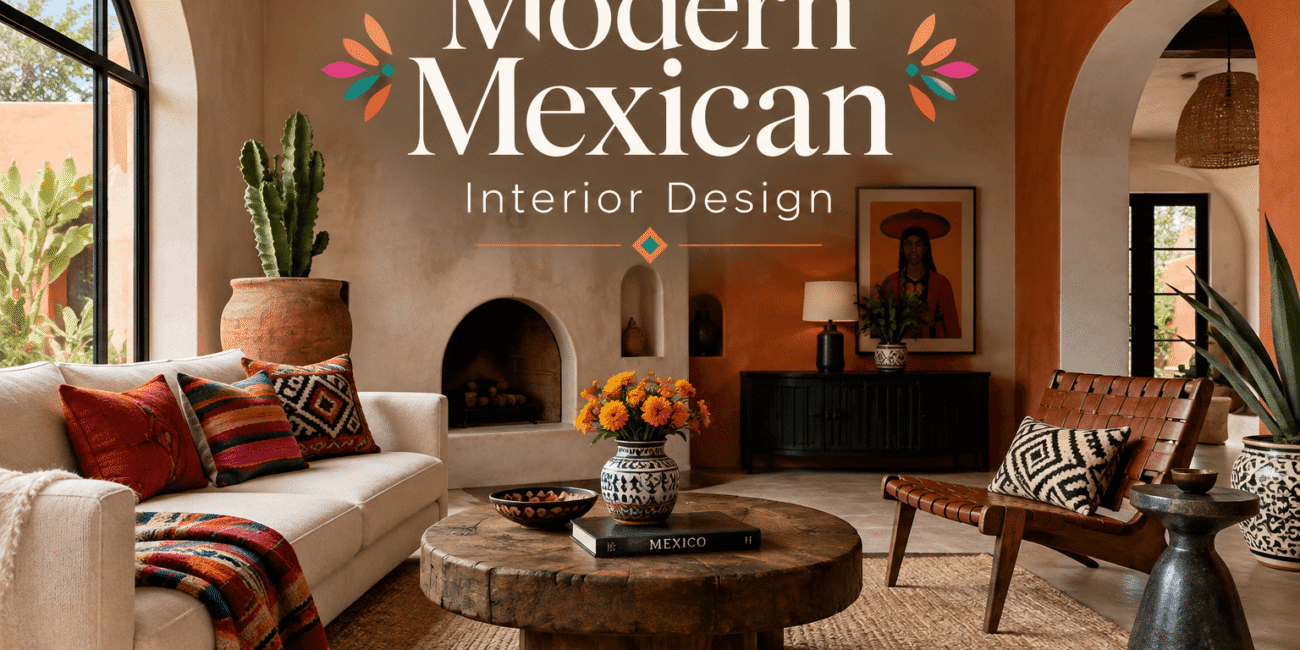
Mexican Interior Design: A Vibrant Fusion of Culture, Color, and Craftsmanship
I’ve walked into hundreds of homes over the years as a design writer, and there’s one style that people always stop and ask about the moment they see it: modern Mexican interior design. It’s not hard to see why. A hand-glazed Talavera tile, a sun-bleached terracotta wall, a chunky equipal chair sitting under warm pendant light none of it feels forced. It feels lived-in, layered, and a little bit like a story someone’s grandmother started telling decades ago.
At its heart, this style is a meeting point of three worlds: the earthy, symbol-rich craft of Mexico’s indigenous communities, the ironwork and tilework brought over during Spanish colonial rule, and a contemporary hand that knows when to simplify. Whether you’re working with a sun-washed courtyard home in Los Angeles or a small apartment in Brooklyn, leaning into modern Mexican decor gives a space a kind of warmth that’s genuinely hard to fake with anything else.
What Is Mexican Interior Design Style?
Mexican interior design isn’t really a “look” you can buy off a shelf it’s a way of building a home around craftsmanship, color, and honest materials. Ask any designer working in this space and they’ll point you toward a few non-negotiables:
- Bold, sun-drenched colors: terracotta, cobalt blue, mustard yellow, and deep chili red
- Natural, tactile materials: carved wood, hand-fired clay, quarried stone, and forged iron
- Handcrafted pieces: woven textiles, painted pottery, and carved furniture that shows the maker’s hand
- Storytelling through art: Talavera tiles, folk motifs, and wall pieces that carry generations of meaning
According to Love That Design’s breakdown of Mexican interiors, the style’s roots run through pre-Hispanic craft traditions and Spanish colonial architecture alike, which is exactly why it never reads as one-note. Traditional Mexican design leans fully into saturation and pattern, while its modern cousin keeps the soul of that heritage but edits it with cleaner lines, quieter palettes, and finishes that feel current. The result is modern Mexican home decor that’s rooted in history but never feels like a museum piece.
Key Features of Modern Mexican Interior Design
1. Color Palette: Earthy Meets Bold
Old-school Mexican interiors go all in on saturated color. The modern take is smarter about restraint it lets a handful of bold shades do the talking against a much quieter backdrop. In most rooms I’ve styled or studied, that usually breaks down to:
- White or warm cream walls as the canvas
- Grounding accents in terracotta, sage green, or burnt orange
- Small, deliberate pops of turquoise or magenta in pillows, art, or ceramics
That contrast is really the whole trick behind contemporary Mexican interior design you get the vibrancy without the room feeling like it’s shouting at you.
2. Texture and Materials
This style rewards touch. Exposed wood beams, hand-thrown clay pots, embroidered cushions, and nubby woven throws all do heavy lifting here. If you’re refreshing a room from scratch, our guide on how to decorate your home with fresh interior design ideas is a useful starting point before you start layering in Mexican-inspired pieces. Pairing those raw, natural textures with a few sleeker surfaces polished concrete, matte black metal fixtures is what keeps a Mexican minimalist decor approach from tipping into clutter.
3. Artisanal Accents
This is where the craftsmanship really shows. A few pieces go a long way:
- Talavera tile on a backsplash, stair riser, or bathroom accent wall
- Hand-blown glass pendants over a kitchen island or dining table
- Wrought iron on headboards, mirrors, or dining chairs
Talavera pottery, in particular, carries serious cultural weight in 2019 the traditional craft from Puebla and Tlaxcala was formally recognized by UNESCO as Intangible Cultural Heritage, a nod to centuries of hand-thrown, hand-glazed technique that’s still practiced by artisan families today. Choosing pieces like this isn’t just decorating — it’s bringing genuine cultural craftsmanship into your home.
4. Indoor-Outdoor Connection
Mexico’s climate shaped its architecture long before “indoor-outdoor living” became a buzzword everywhere else. A few things to borrow:
- A courtyard or covered patio with layered greenery
- Wide doors or floor-to-ceiling windows that actually open
- Terracotta tile that runs seamlessly from the living room out to the patio
If you’re already planning a backyard refresh, our cozy backyard design tips pair naturally with this approach think of the patio as a true extension of the room next to it, not an afterthought.
Modern Mexican Interior Design Ideas, Room by Room
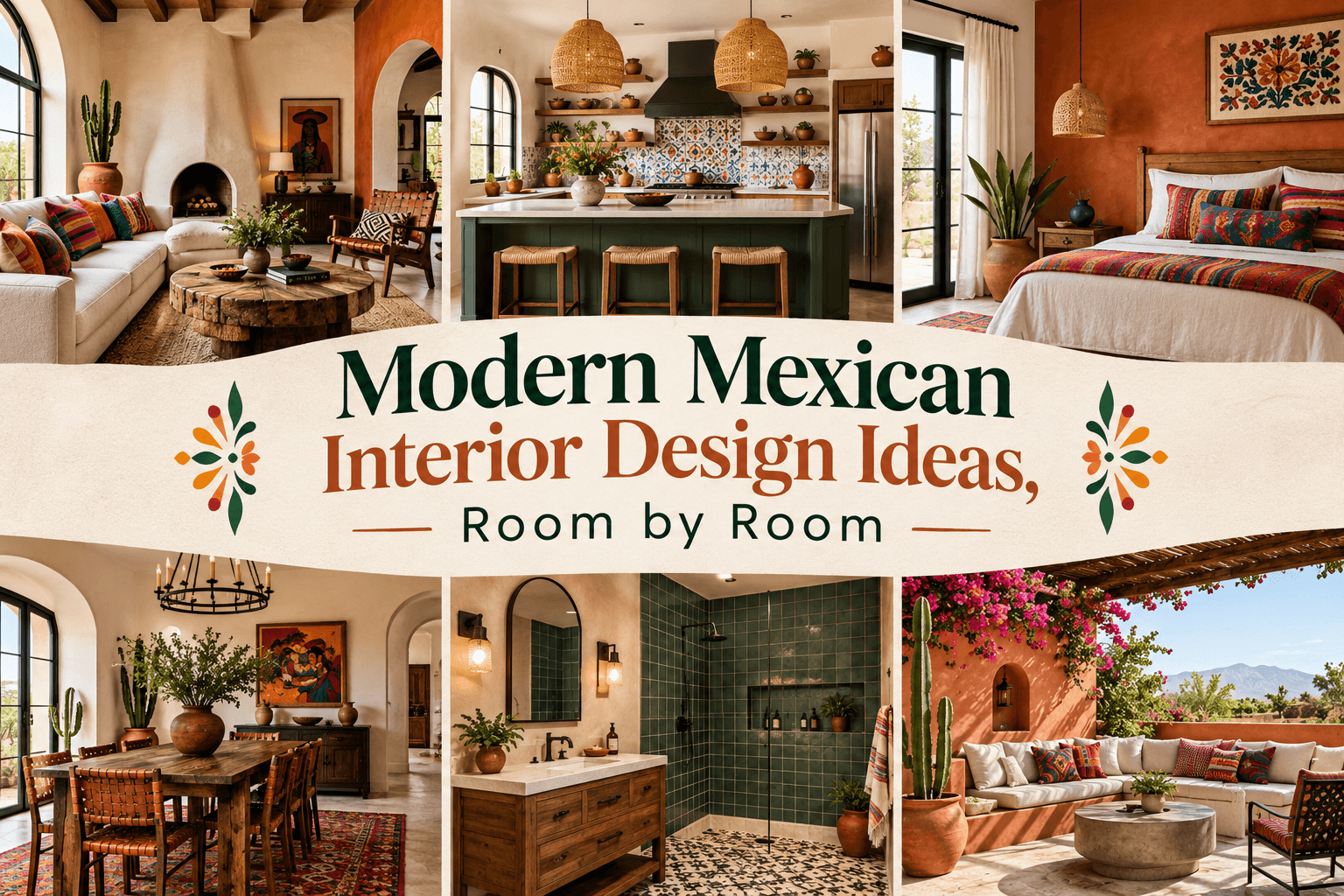
One of the questions I get most often is how this style actually translates from a Pinterest mood board into a real, livable room. Here’s how it tends to play out space by space.
Living Room
A modern Mexican interior design living room usually starts with a neutral sofa, then builds character through a hand-loomed rug, a carved coffee table, and one or two statement textiles in serape stripes or Otomi embroidery. If you’re still shaping the rest of the room, our living room decor ideas for families can help you balance comfort with all that visual texture.
Bedroom
In a modern Mexican interior design bedroom, restraint matters more you want the space to feel calm, not busy. A wrought iron headboard, linen bedding in warm neutrals, and a single embroidered throw pillow usually say more than a room packed with pattern. For more layout and styling inspiration, our bedroom interior design trends guide is worth a look.
Kitchen
The kitchen is arguably where Talavera tile shines brightest a modern Mexican interior design kitchen often uses it as a backsplash accent rather than covering every surface, paired with open wood shelving and warm brass or iron hardware. Rounding out the space with the right accessories makes a real difference; browse our kitchen accessories picks for pieces that lean into that same handcrafted feel.
Exterior
A modern Mexican home exterior typically leans on stucco walls in warm neutrals, deep wood or iron doors, and terracotta roof tiles simple materials that age beautifully rather than needing constant upkeep. It’s a look that photographs just as well on a Pinterest board as it does in person.
How to Incorporate Modern Mexican Decor in Your Home
Whether you’re renovating a whole house or just refreshing one room, here’s how I’d actually approach it:
Start with a neutral base. Warm whites or soft, muted grays on the walls give your accent pieces room to breathe instead of competing with them.
Invest in one statement piece. A reclaimed wood dining table or a leather equipal chair can anchor an entire room. You don’t need five of these one honest, well-made piece beats a handful of mediocre ones.
Layer in textiles gradually. Serapes, Otomi embroidery, and fringed throws are an easy, low-commitment way to test the style before going further.
Seek out handcrafted pieces. Artisan markets and small online sellers carry pottery, masks, and wall hangings that mass-produced decor simply can’t replicate.
Mix old with new, deliberately. Pairing a carved colonial-style mirror with sleek, minimalist lighting keeps the room from feeling like a period piece.
Use odd-numbered groupings when styling shelves or tables. This is where the classic 3-5-7 rule in interior design comes in grouping decor in threes, fives, or sevens (instead of even pairs) creates a more natural, less “matchy” rhythm that suits this style’s handmade character perfectly. If you’re arranging pottery on an open shelf or building out a gallery wall, this one habit alone makes a noticeable difference.
If your renovation plans go beyond decor and into structural changes, it’s worth reading through our complete guide to dream home renovation and remodeling before you commit to a budget.
Why Mexican Interior Design Resonates Globally
What makes modern Mexican interiors travel so well beyond Mexico itself is that they’re built around feeling, not formula. There’s no strict rulebook telling you exactly which shade of terracotta or which iron finish to use just a set of principles rooted in craftsmanship, warmth, and color that people everywhere respond to instinctively. For U.S. homeowners, it’s often a way to connect with Latin American heritage; for others, it’s simply an antidote to the sameness of all-white, catalog-perfect interiors. Either way, it’s a style that rewards patience, sourcing thoughtfully, and letting a room evolve over time rather than furnishing it in one weekend.
Frequently Asked Questions (FAQs)
1. What is Mexican interior design style?
It’s a design tradition built on bold, saturated color, natural materials like clay, wood, and stone, and handcrafted details such as Talavera tile, woven textiles, and wrought iron. It blends indigenous Mexican craft traditions with Spanish colonial influence into one warm, textural aesthetic.
2. What are some modern Mexican decorating ideas?
Start small: a Talavera-tiled backsplash, an equipal chair as an accent seat, a hand-loomed rug, or a wrought iron mirror. Layering two or three handcrafted pieces against a neutral wall color is usually enough to shift a whole room’s personality without a full renovation.
3. What is modern Mexican style?
Modern Mexican style takes the color and craftsmanship of traditional Mexican decor and edits it for today’s homes cleaner furniture silhouettes, more neutral wall tones, and fewer but more intentional statement pieces, so the handmade details still stand out.
4. What is the 3-5-7 rule in interior design?
It’s a styling principle where you group decorative objects books, candles, pottery, art in odd numbers (three, five, or seven) rather than even pairs. Odd groupings read as more natural and visually interesting because the eye can’t settle on a symmetrical middle point, which is exactly why it works so well with handcrafted, asymmetrical Mexican decor pieces.
5. Can Mexican interior design work in small spaces?
Absolutely. Stick to a few well-chosen elements a textile, a small tile accent, one piece of handcrafted wall art — rather than trying to fit the whole aesthetic into a tight room. Our apartment decorating tips cover more ways to make small spaces feel intentional rather than cramped.
6. How is modern Mexican decor different from traditional Mexican decor?
Traditional Mexican decor leans into maximalism saturated color across every surface, heavy pattern, ornate carving. Modern Mexican decor keeps the cultural motifs and color story but pairs them with simpler furniture lines and more breathing room, so the craftsmanship reads as intentional rather than overwhelming.
7. What colors define Mexican style home decor?
Terracotta, mustard, deep red, cobalt blue, and earthy green are the signature shades, usually balanced against neutral backdrops like beige, ivory, or soft gray so the color doesn’t overwhelm the room.
8. Where can I shop for modern Mexican home decor?
Artisan markets, small Latin American import shops, and platforms like Etsy are your best bet for authentic, handcrafted pieces. Larger retailers such as West Elm, CB2, and Anthropologie also carry collections that nod to this style if you want something more accessible to start with.
Final Thoughts
Mexican interior design offers something a lot of trend-driven styles don’t: staying power. It’s built on craftsmanship rather than fashion cycles, which is exactly why it still feels fresh decades after it first caught on outside Mexico. Bringing modern Mexican home decor into your space whether through one hand-painted tile or a full room refresh means building a home around real materials, honest color, and pieces with an actual story behind them. Start with one piece you genuinely love, and let the rest of the room grow around it.
Other Articles
Kitchen Cabinets: The Heart of Your Kitchen Makeover
How to Create a Stunning Dining Room Accent Wall

